Already know your Fair?
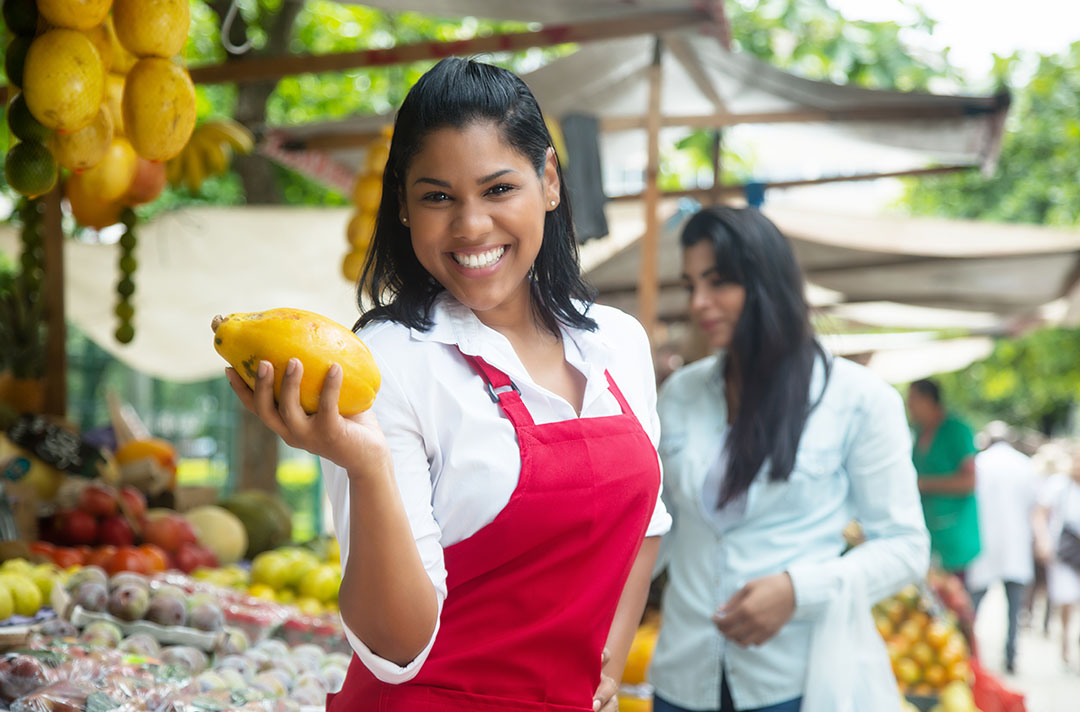
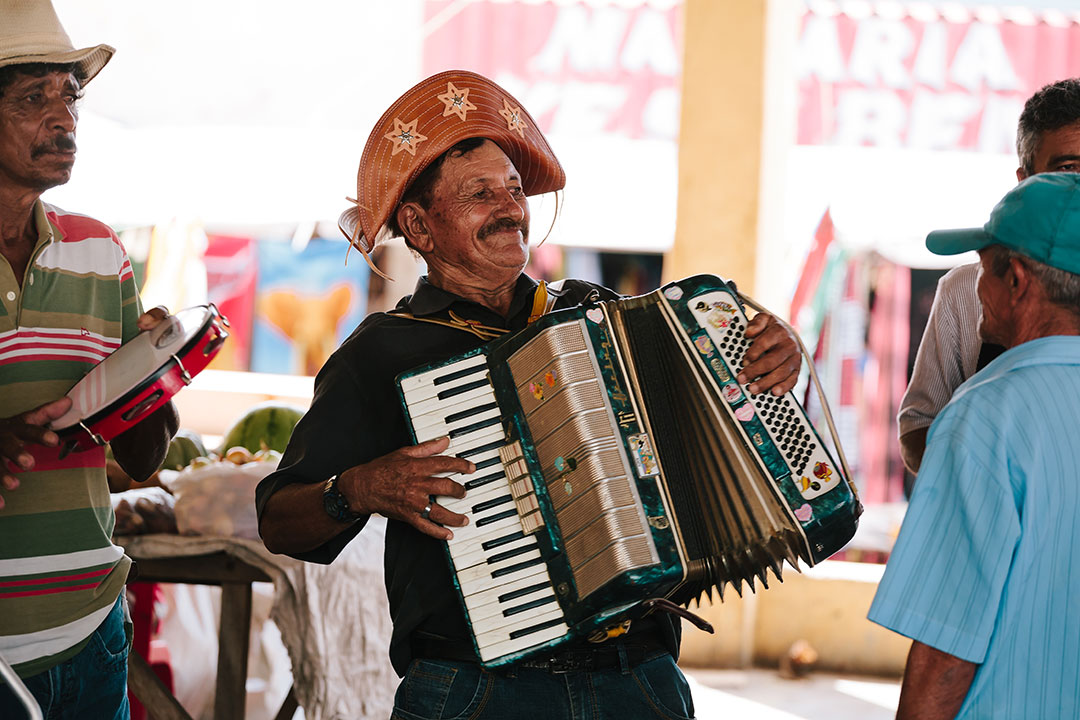
The holding of the feira, also known as "free fair", stands out for being an event eminently carried out in public spaces, since the most remote times of the humanity, and therefore it is a peculiar type of territorial occupation.At the fair, knowledge is produced, experiences are exchanged, business is carried out; it is an area for work, but also for education and entertainment.It is a space that mainly favors the role of rural producers and artisans, being a component of local popular culture and, although universal in character, they stand out for the particularities of their people and their production.In this way, the characteristics of one are related to the social practices and customs of the region in which it takes place.In EKONAVI, all types existing in society are present, each with its own peculiar character.They can be organized by the producers and artisans themselves, as well as the support of social organizations for their realization.Through the platform's tools, organizers can publicize their fairs to appear in the “Events” section, attracting more attention from the public in their region to the events.Some capitals stand out for the organization of their fairs, with the support and dissemination of city halls, such as Belo Horizonte, Curitiba, Porto Alegre, São Paulo and Recife.In these cities, the history of organizing the movements of commercialization of family farming products is old, a fact that allowed the evolution of organizations and the institutionalization of the fair as a permanent social practice.In the cities of the interior, there are also many organized in towns and districts, which keep the cultural traditions alive in the places further away from the big urban centers.In the more traditional ones, the symbology of events usually revolves around religious activities, seasonal food harvesting and ancestral cultural practices.In general, they are spaces where society meets for the exchange of goods and experiences, where producers meet the population and ideas circulate.In this sense, these events have great importance within a society, connecting the ends of the production chain and uniting several other aspects of society.The fair allows people producing food, in natura or processed, to present their work to other people, gaining the community's attention and obtaining remuneration for their product.On the other hand, the fair is also the space for the population that does not work directly with agriculture to acquire the necessary food for their family.However, fairs are much more than spaces to negotiate products, above all, they are the place where producer and consumer meet, get to know each other and establish relationships of trust and friendship.In this direct contact, the producer can expose his knowledge, his experience, and even his difficulties, to an audience that values his work.It is even a moment where younger people can have their recognition, bringing out their potential in society, and, therefore, fairs have the potential to change the content of the countryside, life and work, in a positive and qualified dimension.But fairs are also highly educational for city dwellers. They can reverse the practice of consumption of processed foods and fast food, which is on the rise in Brazil.According to IBGE data (2017/2018) processed foods represent 50.5% of the country's total diet, involving both culinary ingredients and ultra-processed foods.A visit to the fair can help to change eating habits, make it possible to question the differences in food production, in addition to favoring the recognition of the importance of the field worker.In this environment, people have the opportunity to relate directly with producers, making food negotiation have a much more valuable meaning, both for those who buy and for those who sell.In this way, awareness of these aspects of food becomes an aspect present in the environment of a fair.Ecological fairs are of fundamental importance in the dissemination of agroecology knowledge practices, through the interaction between farmers, artisans and the public.Often, these events are the only opportunity that all these agents find, since they spend most of their life dedicated to work, thus making the fair into an meeting space and decision making among peers as well.In this sense, they can exchange their experiences, learn different things, form new organizations, hire services and all other activities that make up their daily lives.Thus, the fair can assume the character of a community meeting, both as a meeting point for exchanges and as a place for management and learning.With the advance of modernity, many changes occurred in the food production and distribution system, bringing a new dynamic and importance to fairs in society.In this context, much of the food started to be transported over long distances, involving high energy consumption in the process of food distribution and storage.In addition, industrial food is increasingly being produced through ultra-processing mechanisms, breaking the strong natural link between consumers and producers.Thus, the fair not only contributes to the reduction of transport costs as a whole, but is also the opportunity for people to have access to local, fresh and good quality food, establishing a connection between the community and its food.In addition to being a space for food exchanges, the fair is also an important cultural space for society, where local handicrafts can be sold and varied artistic exhibitions are held, such as exhibitions of works of art, presentations by local musicians, dances, etc.All these practices are, in a complementary way, components that fill the human landscape of a fair environment, provoking synergies between all those present at the place.In this context, painting, dance, scenic art, magic and mime are some of the expressions that are found, attributing other meanings of life in the experience of the fair, provoking interlocutions of meanings and generating an interpretative synthesis in the subjectivity of the population.🏡 Criar Projeto
📣 Criar Publicação
📆 Criar Evento
🎁 Criar Produto